
New Play Space Unveiled at The Salvation Army’s Red Shield Family Residence
“Every child deserves a space where joy can thrive” says Captain Benjamin Lyle, Area Commander of The Salvation Army in Greater Philadelphia.
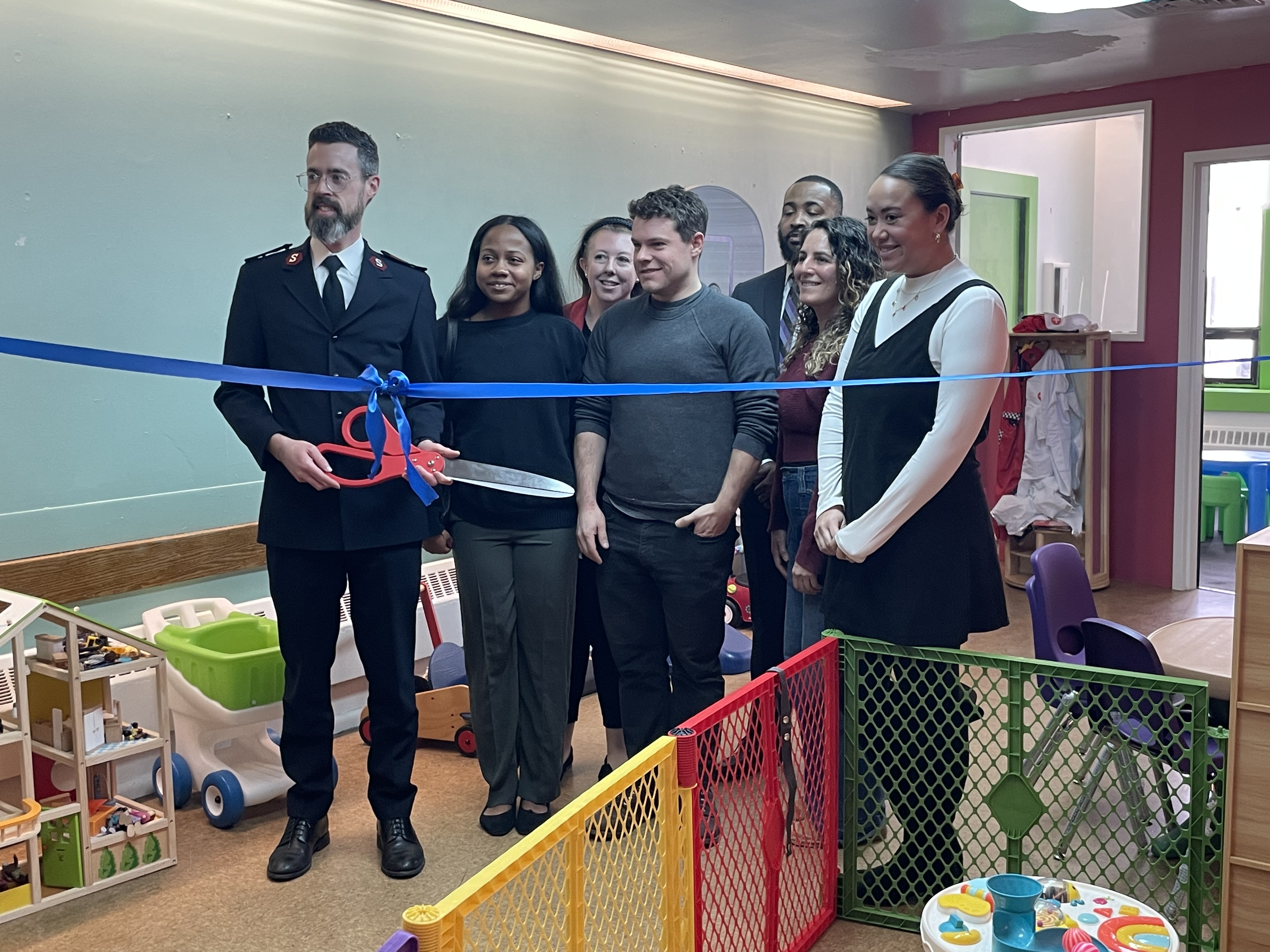
In February, The Salvation Army cut the ribbon on a newly donated, custom-built play space at its Red Shield Family Residence, offering young children a place where they can laugh, create, and simply be kids in the midst of uncertainty.
Operated by The Salvation Army in Greater Philadelphia, the Red Shield Family Residence is an emergency housing shelter serving families experiencing homelessness in lower North Philadelphia. With 119 beds, the shelter provides critical support to 308 individuals, 183 of whom are children, and serves about 20 families per night through after-hours intake alone.
The new play area was made possible through a grant from the William Penn Foundation to HopePHL, a Philadelphia-based organization providing housing, advocacy, and trauma-responsive services to help children, youth, and families, in partnership with Playful Learning Landscapes, a nonprofit that designs site-specific playful installations in collaboration with local communities — creating spaces for children and their caregivers that center learning through play.
The process began in early 2025 when Rachel Schwartzman, Senior Program Manager at Playful Learning Landscapes, and her team visited Red Shield to learn how the children liked to play.
“We heard they were building forts out of the couch cushions and that seemed like such a dimensional idea to run with,” Schwartzman said. “Something so unique and tailored to something they were already interested in doing.”
From there, the team hosted a fort-building night with resident families, bringing in cardboard, fabric, and twinkle lights while having conversations with parents, caregivers, and children about what makes a space feel cozy. Those insights helped shape the final design.
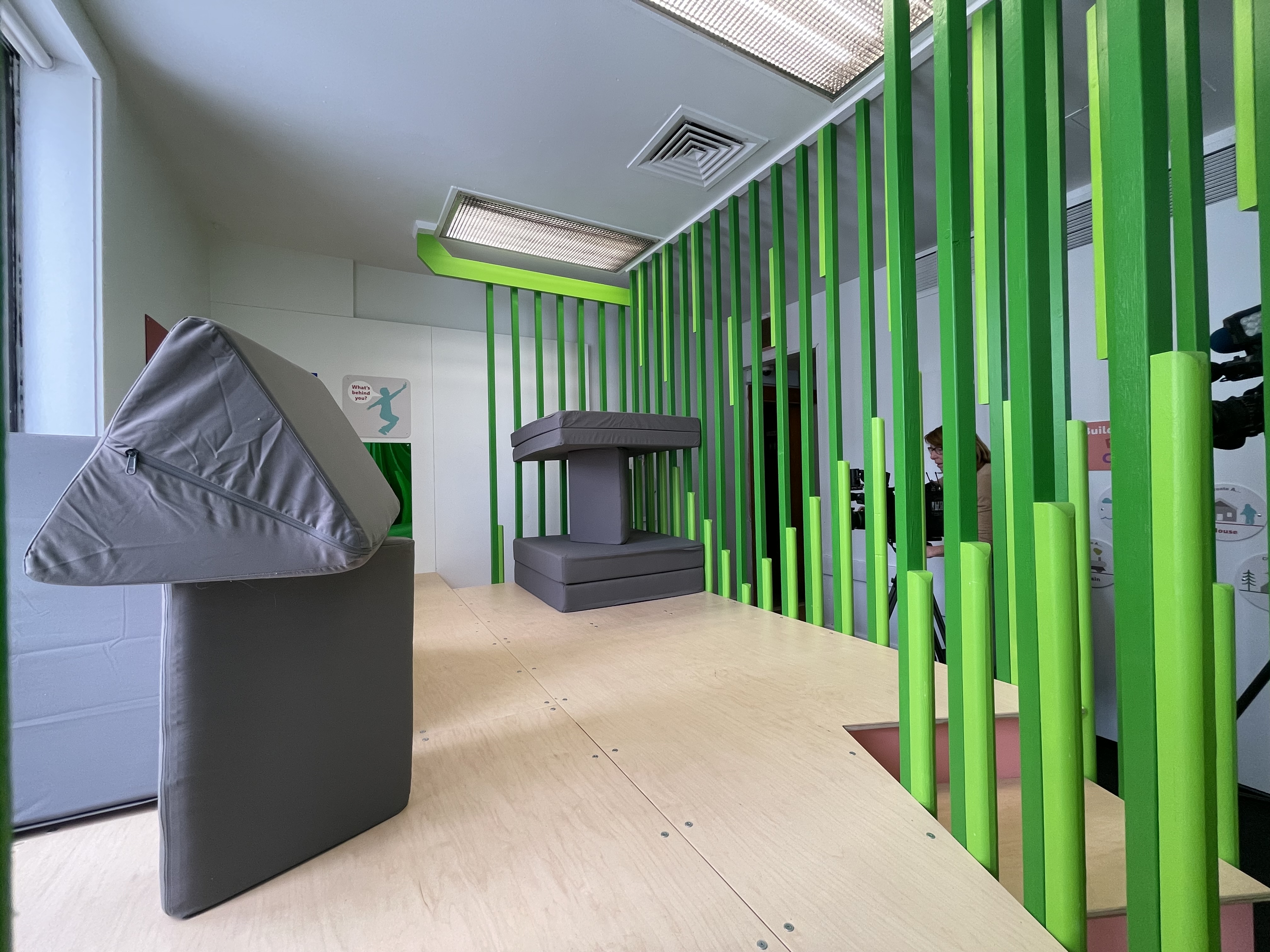
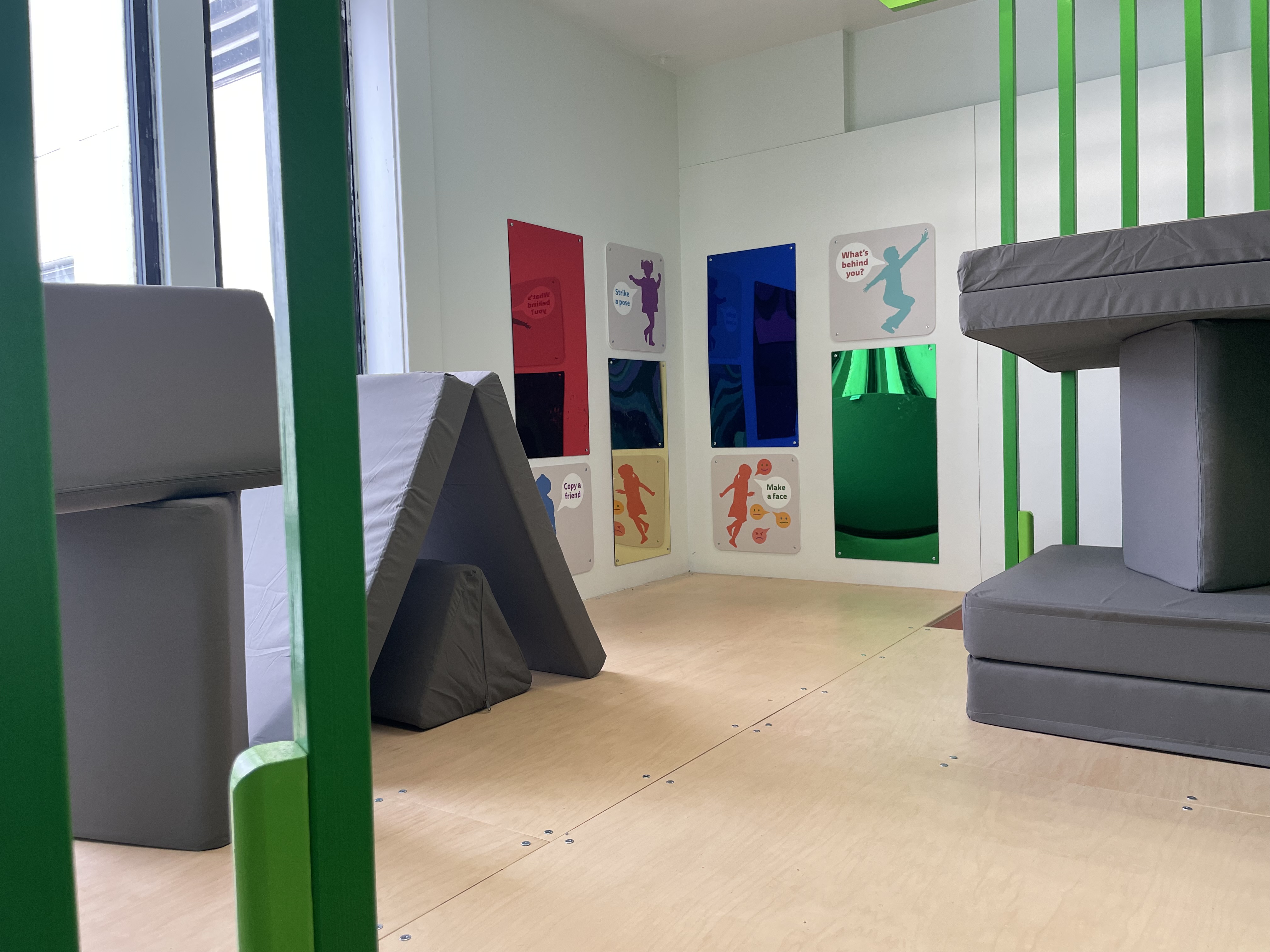
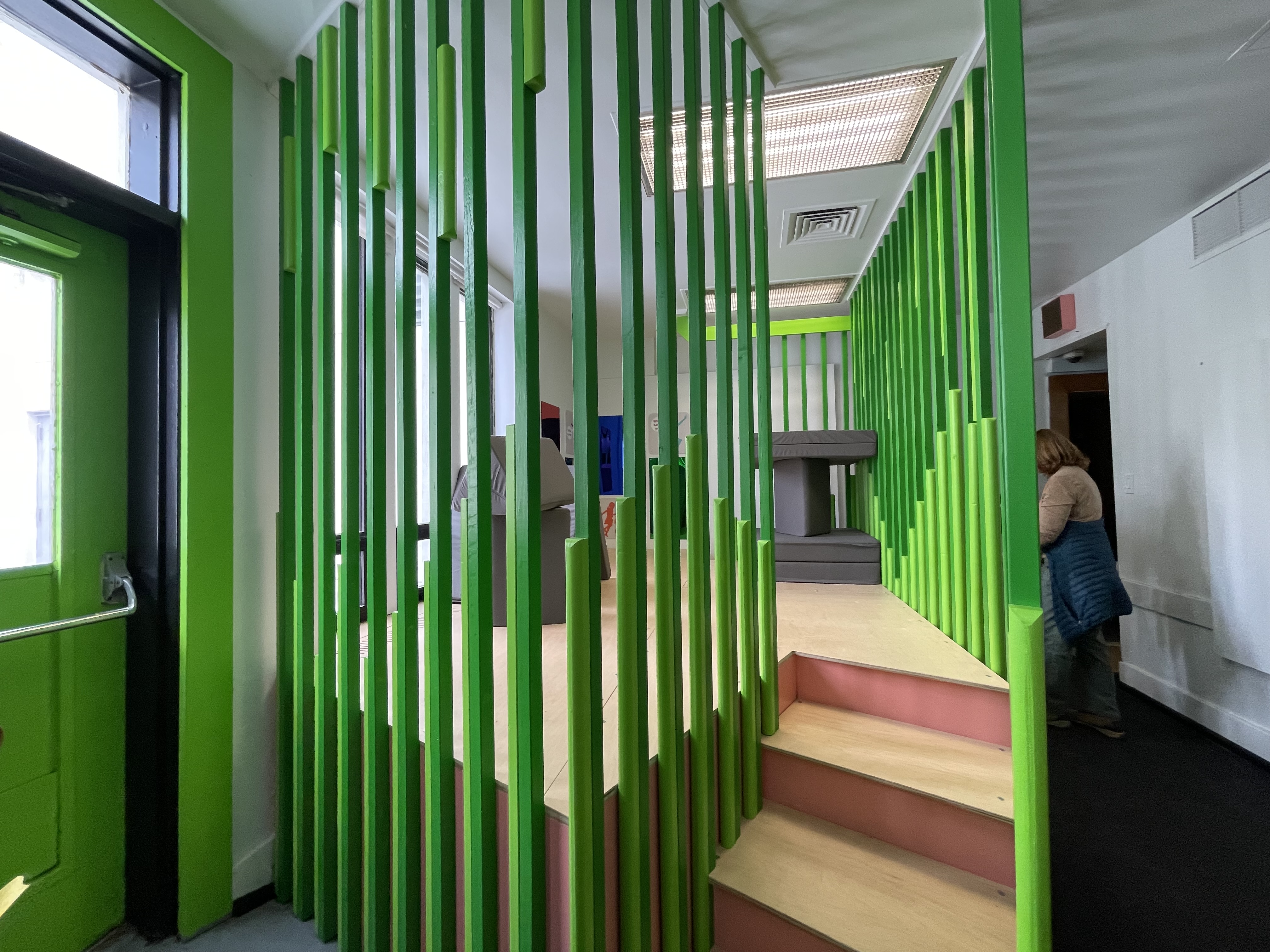
Surrounded by bright green pillars and elevated off the ground, the structure creates a lofted play area children can reach with a short flight of steps. Inside are grey triangular and square cushions that they can move and rearrange with signs along the wall encouraging them to create a boat, house mountain, train tree, or tent — continuing the imaginative fort-building that inspired the space.
Allen Pierce, a Principal at the architecture firm HEIMA and a Professor at Temple University, brought in five graduate students to observe the fort-building night and translate the children’s ideas into a buildable space.
“I live within a mile of here. We teach within a mile of here, so this is our community,” Pierce said. “We’re always looking for opportunities to use our art to make a community better, and we want to do what we can when we can to help.”
For Omari Baye, Director of Early Childhood Programs at HopePHL and a former shelter director himself, the new space carries great significance.
“I remember what it was like not to have spaces for families to go and interact,” Baye said. “So, to give them more than ‘three hots and a cot’ and to actually have resources available to help children grow and develop — that’s a beautiful thing.”
Baye emphasized that the space is designed not just for children, but for parents and children to use together. It will become a place where caregivers can get an emotional boost, find support, and access programming partners who can offer new approaches to everyday parenting challenges.
That sense of belonging is at the heart of what Capt. Lyle hopes the play space will mean for residents.
“We want the Red Shield Family Residence to feel like home to all of our residents,” Capt. Lyle said. “Many of them are going through very difficult times and we want this to be a place of respite. A safe place. A place where children can come and feel at home and just enjoy life.”
Across its two emergency housing programs in Philadelphia, Red Shield and Eliza Shirley House, The Salvation Army served 580 individuals last year, 341 of them children, provided more than 18,000 meals and supported 209 families.
Learn more about the Red Shield Family Residence.