
The 5 Scariest Car Seat Mistakes
In honor of spooky season, let's talk about some of the scariest (and most common) car seat mistakes - and how to avoid the horror!
Scary Mistake #1 - Bulky Coats (or costumes) in the Car Seat

Now that the weather is delightfully crisp, it can be tempting to bundle up our littles before leaving the house so they're all nice and cozy. But beware - bulky coats, jackets, snowsuits, or buntings are NOT safe to be worn in a car seat. Why? Because they prevent the seat's harness from being tightened properly. In a crash, the bulk of the coat will constrict, making the harness too loose and putting the child at risk of injury or even ejection from the seat.
The safest way to know whether your child's jacket is car seat safe is to test it by:
- Buckling the child into the seat with the jacket on, and tightening the harness
- Without loosening the harness, remove the child from the seat and take the jacket off
- Put the child back in the seat and buckle the harness
- If the harness fits them properly without having to be further tightened, the jacket is NOT affecting the harness fit, and is safe to be worn in the car seat.
- If the harness no longer passes the "pinch test" and needs to be tightened to fit the child without the jacket, that means the jacket is interfering with the harness fit and is not safe to be worn in the car seat.
Never fear...there are still some safe ways to keep your child warm and cozy on the way to school or daycare in the morning! The easiest is with a nice snuggly blanket (sherpa ones work great) that they can wear over top of their harness after they are safely buckled in. Another idea is to put the child's coat on them backwards over top of the harness.
With Halloween coming up, don't forget that the same rules apply to costumes!
Scary Mistake #2 - After Market Products
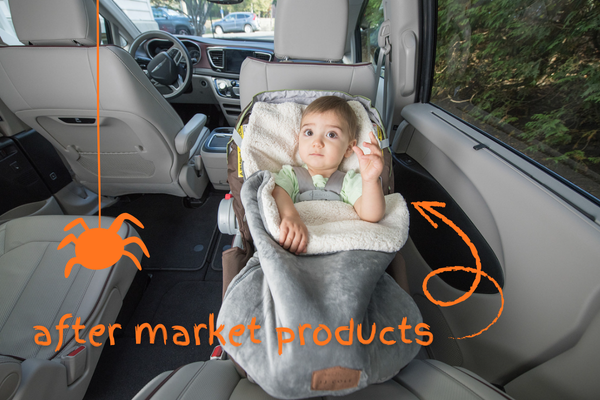
When you walk through the baby aisle at Target or scroll Amazon, you will find lots of "handy" products advertised to be used with your car seat. STEP AWAY FROM THOSE PRODUCTS! I repeat, PUT THOSE PRODUCTS DOWN! At their best, these products have not been crash tested to meet federal standards for car seats (even if they claim to be on their packaging). At their worst, they could pose known dangers when in use.
The rule of thumb when it comes to car seats is, if it didn't come in the box with the car seat, don't use it. This applies to padding, strap covers, head support, winter weather covers, potty training pads, escape proof buckle guards, or anything that attaches to the car seat or goes between the child's body and the car seat. If you ever have a question about a specific product or feel that you have a unique situation where you need to use an aftermarket product, there are two things I would recommend you do:
- Contact the manufacturer of your car seat (for example, Graco, Chicco, Evenflo, Britax, etc.) and ask to speak to a CPST (certified Child Passenger Safety Technician) about whether the product is safe to be used with your particular seat, and/or:
- Contact a CPST to let them know about the specific problem you're having and ask for their help troubleshooting how to safely fix the issue. If you are a Salvation Army family, we have two CPSTs on staff who would be happy to chat with you!
Scary Mistake #3 - Improperly Adjusted Straps
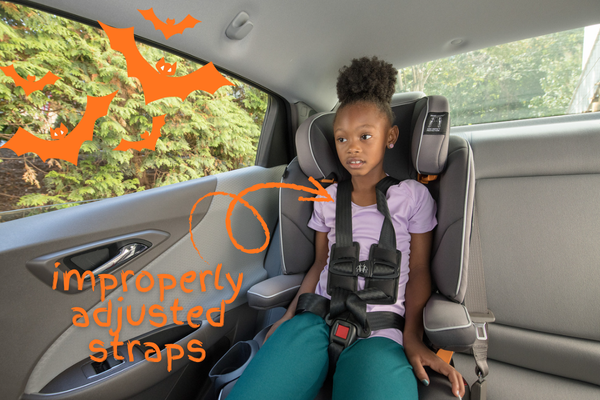
This is one of the most common - and easiest to fix - mistakes that parents and caregivers make with car seats. Before leaving the driveway, make sure that your child's straps are properly adjusted. If your child is in a harnessed seat, this includes:
- Not twisted
- Tight enough to pass the "pinch test" (if you try to pinch the webbing at the child's shoulder, you shouldn't be able to grab it together - if you can, tighten it a bit more)
- Chest clip is at armpit/nipple level
- The top of the straps is coming from at or just above the child's shoulders for forward facing, or at or just below the child's shoulders for rear facing
- The crotch buckle is at the closest slot to the child without being under their bottom, and it is routed in the right slot through both the seat fabric and the shell of the seat (not just the fabric)
If your child is in a booster seat, this includes:
- Making sure the child has both a lap and shoulder belt
- Making sure the lap and shoulder portions of the belt are routed properly through the booster seat (check the manual/stickers on the side of the seat for proper positioning)
- In a backless booster, use the included shoulder belt positioning clip if needed to keep the shoulder belt centered on the child's collarbone, not cutting across their neck
Scary Mistake #4 - Moving a Child to the Next Stage Too Early
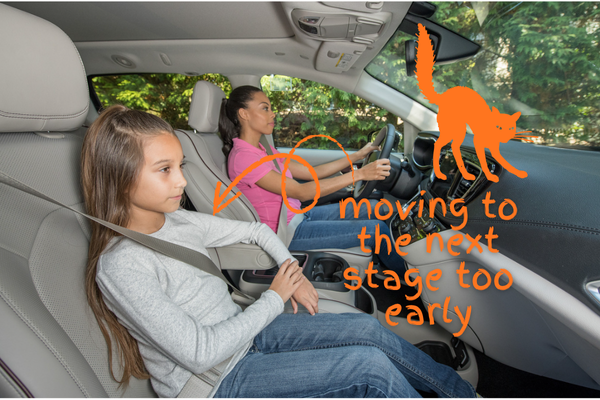
As a parent, I get it - as kids grow, it can be tempting to rush to move them up to the next stage of car seat. Sure, it's easier to move your toddler from rear to forward facing, your preschooler from a harness to a booster, or your school age kid from a booster to the seat belt. But is it safe?
This is probably the #1 scary mistake I see as a CPST working in the foster care and adoption space. Many well-meaning caseworkers, transporters, and foster and adoptive parents tend to gravitate toward the "easiest" option and it's understandable. They are working with limited resources, tight deadlines, little education or training, and hundreds of other details that seem to be higher priority. But I would argue that there is no higher priority than keeping our precious kids safe. So with that in mind, here's how to make sure you are keeping your little ones as safe as they can be and not rushing the process of moving them to the most minimal seat.
First, make sure you're following state laws. That is the absolute minimum standard. In PA:
- All children under 2 should be rear facing
- All children under 4 should be harnessed
- All children under 8 should be boostered
But above and beyond the minimum standards, I would recommend that you strive to:
- Keep children rear facing until they max out the height and/or weight limits for their seat
- Keep children harnessed until they are developmentally ready to sit properly in a booster seat (typically between the ages of 5-6, but could be longer for some children)
- Keep children in a booster seat until they are big enough to achieve a proper fit in the seatbelt (typically between the ages of 10-12, and a minimum height of 4'9" - but can be different for each child and each vehicle)
- Keep children in the back seat until they are are least 13
Scary Mistake #5 - Not Using a Car Seat
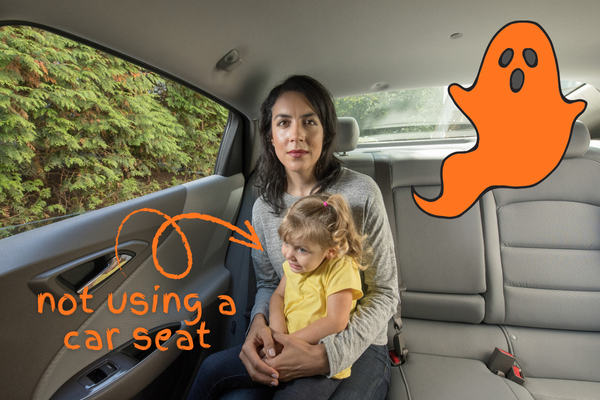
This one might seem obvious, but it does happen - think ride shares, quick trips, caseworkers running clients to appointments, unexpectedly having to pick a child up from school and not having a seat in your car, etc. Apart from the fact that it's illegal (see above), this is an incredibly scary situation.
"But I'm holding them really tight," parents may say and they could be absolutely correct. But the laws of physics make it impossible to hold a child tight enough to keep them properly restrained in a crash. Nobody plans on getting into an accident, especially on a short little trip, but it's incredibly important to be sure that your child is properly protected from one every time they're in the car. Similarly, some parents just buckle their small kids into a car's seatbelt assuming that it would keep them safe enough in the case of an accident. But unfortunately, seatbelts are designed to fit adult-sized bodies, and too-small children could actually be seriously injured by seatbelts, in addition to missing out on any protection they would offer to an adult.
When a situation creeps up where you don't have access to a car seat, try to use public transit if possible - city buses, trains, and subways do not require the use of car seats.
Want to receive car seat safety tips and other helpful foster care and adoption-related content in your inbox monthly? Sign up for our email newsletter here!